October 5 provincial election: what the candidates say about Chelsea's four priorities
September 15, 2026
Why we did this
On October 5, the people of Chelsea will choose who speaks for them at the National Assembly. Four files that will shape our municipality's future rest entirely with the Québec government, and none of them will move without clear, sustained provincial support.
After meeting several candidates over the summer, the Mayor put the same questions to them in writing on September 1, undertaking to publish their answers as given. Our residents deserve to know, before they vote, where each candidate stands.
How to read this page
-
The same questions went to all five candidates, without variation, with a September 11 deadline.
-
The answers are reproduced in full, in French and in English, with no commentary, no analysis and no corrections from the Municipality. The statements and figures put forward are the authors' own.
-
The order of presentation is neutral: the parties that submitted answers appear in alphabetical order under each question. As the Parti Québécois did not submit a response, this is noted this at the end of each question, without further comment.
-
Candidates could answer in both languages or in French only. Where an answer was received in French only, the Municipality translated it and submitted the translation to the candidate for approval before publication.
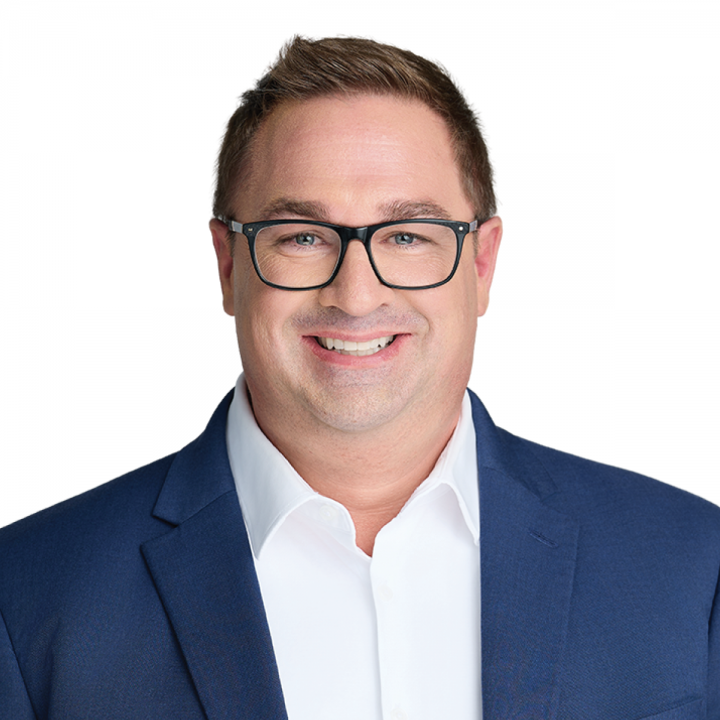
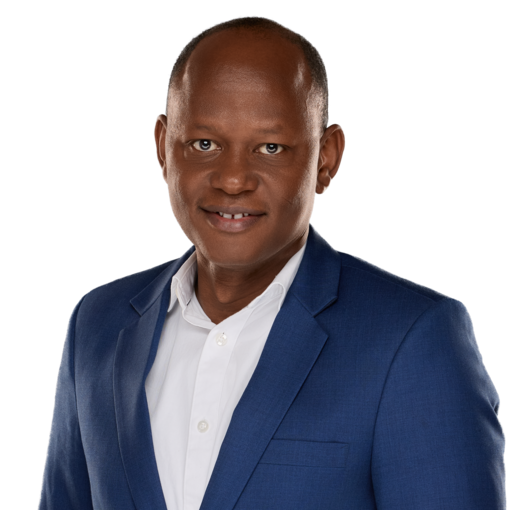
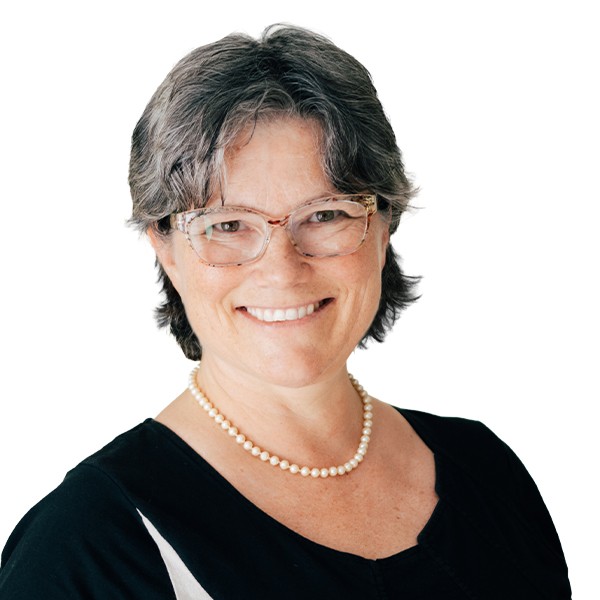
The candidates in Gatineau:
 |
 |
|
 |
 |
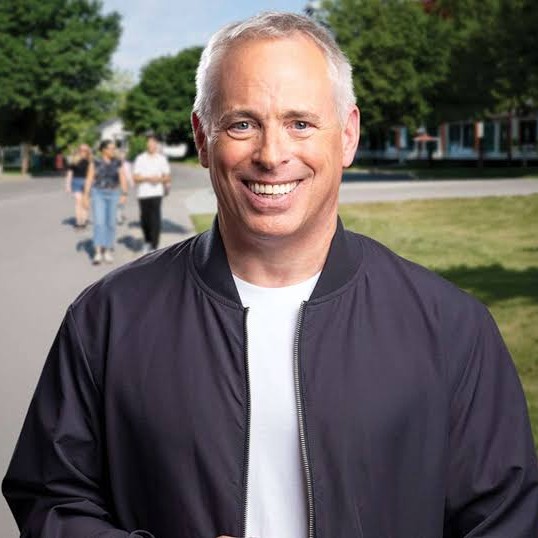
| William Robertson | Bertin Aboussou |
David Logue |
Emmanuelle Tremblay | Raphaël Déry |
| Coalition avenir Québec | Parti conservateur du Québec | Parti libéral du Québec | Québec solidaire | Parti Québécois |
The municipality's only French-language elementary school has reached capacity, and a number of new families have recently settled in Chelsea, increasing demand. The Municipality has done its part: the land has been acquired. What is missing is the funding and the green light from Québec, while school enrolment keeps growing.
Will you commit to having the Ministère de l'Éducation authorize and fund this school during the next mandate, and on what timeline?
|
It must be acknowledged that it was the Équipe Christine Fréchette that had the project entered into the Québec Infrastructure Plan (PQI). In that sense, I obviously recognize the need for this project and the importance of bringing it to fruition for Chelsea families. I recognize the efforts made by both the CSSPO and the Municipality of Chelsea in selecting and purchasing the site. As a candidate, I hold the deep conviction that the best projects come out of communities and out of the partnerships built within them. I went into politics to make a real difference in people's lives, and I have the experience needed to move the new Chelsea elementary school project concretely forward. I therefore reaffirm my full cooperation and support in advancing this file concretely and as quickly as possible. |
|
Chelsea's growth must be matched by public services capable of meeting the needs of the families who choose to live here. A neighbourhood elementary school is essential infrastructure for a growing community. I am in favour of the Québec government examining this file diligently and on the basis of the real needs of Chelsea's population. A municipality that does its part to prepare a project should not be left for years in administrative uncertainty. If I am elected MNA for Gatineau, I commit to actively championing this file with the Ministère de l'Éducation and the bodies concerned in order to obtain clear answers on the steps required to bring it about. To my mind, part of an MNA's role is to move the files of their riding forward, whichever municipality is involved. Chelsea families must be able to count on school infrastructure suited to their community's growth, allowing children to study close to where they live. |
|
Yes. The construction of a new French-language elementary school in Chelsea will be one of the very first issues I will work on as soon as I am elected. I am committed to actively collaborating with the Ministry of Education to secure the approvals and funding needed to complete this project during my first four-year term. The Municipality has already done its part by acquiring the land. Now, it is essential for Quebec to move this file forward in order to respond to growing student enrollment and the increasing needs of our community. For me, this project is a priority. Our children deserve access to a modern school close to home, in an environment that supports their success and well-being. French-speaking families in Chelsea need educational infrastructure that reflects the demographic reality of our region. A new school will not only reduce pressure on existing institutions, but will also strengthen the vitality and dynamism of our French-speaking community. My goal is to begin working from the start of the mandate with the Ministry, the School Service Centre, and local partners to obtain the required approvals and advance the project toward completion within the next four years. |
|
We want to point out that during her visit to the Outaouais at the very start of the campaign, our candidate for Premier, Ruba Ghazal, clearly stated her commitment to funding Outaouais schools that were slated to be built but whose funding was frozen by the CAQ. That includes the new schools needed to meet growing demand and to give children a quality education. Our education commitments are not limited to building new schools. To prevent students from dropping out and to better meet children's needs, we are proposing to add support and professional staff, and to improve both the working conditions of school staff and school infrastructure. We are not, however, in a position to give you a timeline at this point for the Chelsea school specifically.
|
|
No answer received. |
Several roads running through our territory belong to Québec, not to the Municipality. Chemin d'Old Chelsea is the most pressing case: the condition of the road surface and the safety of everyone using it — on foot, by bike, by car — are the responsibility of the Ministère des Transports et de la Mobilité durable (MTMD). The same is true of the MTMD-owned stretch of Route 105 that runs through our populated sectors.
Will you commit to having the rebuilding of Chemin d'Old Chelsea entered into the MTMD's work program, and within what timeframe? Will you also commit to safety measures on the stretch of Route 105 it owns?
|
Previous governments — both Liberal and Parti Québécois — unfortunately under-invested in maintaining our infrastructure across Québec, including here in the Outaouais and in Chelsea. The result of that under-investment is visible every day on the road network. The road network needs to be brought up to standard, and substantially so. That is why the Équipe Christine Fréchette is committing to raise the PQI to $180 billion over the four years of the next mandate, and to allocate 75% of those sums to asset maintenance. These significant amounts will make it possible to carry out work across Québec's entire road network, including local and regional roads under the government's responsibility. As for safety and active transportation measures, it is together that we will move the municipality's priority files forward. |
|
The condition of roads and the safety of travel are fundamental government responsibilities when the infrastructure falls under the Ministère des Transports et de la Mobilité durable. Citizens should not have to choose between paying more taxes and accepting roads that deteriorate. When a road is under provincial responsibility, Québec must fully assume that responsibility. I am therefore in favour of a serious assessment of the maintenance and safety needs of Old Chelsea Road, Route 105 and the other provincial stretches running through the municipality. As an MNA, I would work with the Municipality to clearly establish the priority interventions and to advocate for them with the MTMD. I also believe that infrastructure planning must be improved: it is better to maintain properly and prevent deterioration than to let problems worsen until far more costly work is required. The safety of motorists, cyclists and pedestrians must remain at the heart of these decisions. |
|
Yes. I am committed to working actively to ensure that Old Chelsea Road is included among the priorities of Quebec's Ministry of Transport as soon as I am elected. I have personally seen the concerning condition of this road, and I have heard directly from residents about the risks it poses to them and their children. The safety of residents must be a priority, and this is an issue that requires prompt attention. Regarding the section of Highway 105 between the Alonzo Bridge and Old Chelsea Road, I recognize that it faces significant pressure due to traffic regularly spilling over from Saint-Joseph Boulevard. Many motorists use Highway 5 to bypass this congestion before returning toward Gatineau via Highway 105, which significantly increases the volume of cars and trucks passing through your municipality. This situation raises important safety concerns. Unfortunately, several serious accidents, including fatal ones, have occurred on this stretch over the years. I am committed to working closely with the Municipality of Chelsea and the Ministry of Transport to identify and implement concrete solutions to improve safety on this road and protect the residents who use it every day. |
|
Québec solidaire supports building a road network that is safe for those who have no alternative but to drive to get around. That said, we also support public and active transportation as a way of fighting climate change, and choices will have to be made. We fully understand that rural areas are harder to serve, and that single-occupancy car use and freight traffic contribute to worsening road conditions across Québec. With a view to sustainable development and to maintaining infrastructure in order to ensure safety, Québec solidaire will maintain significant PQI investments to upgrade the safety measures and rebuild roads such as Route 105.
|
|
No answer received. |
The capacity of our drinking water plant is the reason for the moratorium in effect in Chelsea. That moratorium holds back the development that makes sense here: housing for young families who grew up in Chelsea, and smaller homes for seniors who want to stay. A municipality of 9,000 people cannot carry an investment of this size alone.
Will you commit to supporting a Québec contribution toward upgrading our drinking water plant, and to championing this file with the ministries concerned?
|
Municipalities are important partners of the government. It is on that essential basis of collaboration that our government put in place various financial assistance programs for municipalities, to support them in projects such as water treatment plants. These include the TECQ 2024–2028 program, whose $3.2 billion envelope is earmarked for municipal projects, as well as the PRACIM 2025–2028 program, which has $360 million for projects involving municipal buildings, and the most recent enhancement of $1 billion over ten years to help municipalities with their water infrastructure. These programs are in place to support the maintenance and development of municipal networks and to ease the financial pressure on cities and municipalities in carrying out these important projects. They also aim to reduce asset maintenance deficits in municipal water infrastructure and to support the long-term viability of municipal services. Over the past ten years, I have gained the experience needed to move this kind of project concretely forward. I therefore reaffirm my full cooperation and support in advancing the files submitted by the municipality. |
|
Access to reliable drinking water is an essential service and a basic condition for a community's development. Chelsea's situation also illustrates a problem faced by many municipalities: they have to modernize major infrastructure whose costs can far exceed their financial capacity. We must avoid a situation where an infrastructure problem blocks, for years, the construction of housing needed by young families, by seniors and by a community's normal growth. I am therefore in favour of the Québec government working with Chelsea to identify a responsible financial solution allowing the modernization and increased capacity of its drinking water infrastructure. That assistance must, however, come with clear planning, transparent costs and measurable objectives. If I am elected, I commit to advocating for this file with the ministries concerned and to working with the Municipality so that Chelsea obtains a clear answer on the programs and funding possibilities available. |
|
Yes. I am committed to supporting a financial contribution from Quebec for the upgrading of Chelsea's drinking water treatment plant and to advocating for this project with the ministries concerned. This infrastructure is essential to enable responsible residential development and meet the needs of young families and seniors who wish to remain in Chelsea. A municipality of 9,000 residents should not have to bear an investment of this magnitude alone. To support our municipalities, we plan to double the share of municipal infrastructure funding within Quebec's Infrastructure Plan (PQI), increasing it from 4.4% to 8% during a first mandate and maintaining that level afterward. As an elected representative, I will work with all levels of government, federal, provincial, and municipal, to secure the resources needed and move this priority project forward as quickly as possible for your community. |
|
Québec solidaire is committed to rethinking the fiscal pact with municipalities and to increasing and simplifying funding for their infrastructure, which could in particular make it possible to upgrade infrastructure such as Chelsea's drinking water plant. We see that across Québec, municipalities are too often left to fend for themselves, relying too heavily on property taxes. We trust regional and local bodies to plan the development of their territories and their infrastructure. They are the experts of their own communities.
|
|
No answer received. |
The Mayor's framing. The funding gap between the Outaouais and the rest of Québec has been documented for years, across nearly every sector: health, education, transportation, culture. This is not a local impression.
What specific commitment do you make, and what would be your first action as an elected member, to close that gap?
|
Previous governments acknowledged in 2019, through the unanimous adoption of a motion tabled in the National Assembly by our political party, that the Outaouais region had been underfunded over the past 50 years (and even longer). That is the starting point. The Observatoire de développement de l'Outaouais (ODO) produces factual, objective analyses of certain sectors every year in order to illustrate progress sector by sector. With only two mandates in government, one of them spent entirely managing a pandemic, it is impossible to close entirely the gaps that have always existed in the region — but what matters is seeing that the indicators are moving, and that is what is happening now, particularly in health care with the new hospital and in culture with the new Musée régional de l'Outaouais. It is a sign that the Outaouais is now being heard. Finally, if the citizens of the riding of Gatineau place their trust in me on October 5, I commit to giving a strong voice to the people here at home so that we can keep moving forward together. |
|
The feeling that the Outaouais does not get its fair share comes up constantly in my meetings with people from the riding. Whether we are talking about health care, infrastructure, public services or regional development, the people of the Outaouais must be able to obtain services comparable to those offered elsewhere in Québec. I do not believe, however, that the solution is simply to spend more without reviewing the way decisions are made. We must also give the regions more weight in setting priorities and make sure that every public dollar produces concrete results. That is why I stand for an approach based on better regional representation, more decisions taken in light of local realities, and greater accountability in the use of public funds. If I am elected MNA for Gatineau, I will be particularly vigilant on this question. My role will be to make Chelsea and the entire riding heard when budgets and government priorities are set. The Outaouais is not asking for special treatment. It is asking to be treated fairly. |
|
In health care, the Outaouais funding deficit is well known. For years, our region has received less than its fair share despite growing needs. Over the past eight years, the situation has worsened: operating rooms have closed, family physicians and specialists have left the region, and health care workers are exhausted. Too often, they choose to cross the river and work in Ontario, where conditions are more attractive. That is why, under a Liberal government, we are committed to adopting special legislation for Outaouais that would provide salary parity with Ontario for all health care professionals in the region. This commitment represents an initial investment of $90 million to improve recruitment and retention, a key condition for improving access to care. In transportation, we are committed to completing Highway 50 along its entire length within the next ten years and twinning its two most dangerous sections during a first mandate. The people of Outaouais deserve a safe road connection with the rest of Quebec, not a highway nicknamed "the Highway of Death." Finally, a Liberal government will increase investments in the Quebec Infrastructure Plan (PQI) to reduce the maintenance deficit affecting transportation infrastructure, including Old Chelsea Road, Highway 5, and Highway 105. Better-maintained roads are essential for safety and economic development across our region. |
|
Québec solidaire recognizes the neglect of the Outaouais by successive governments. One of our first actions will be to tackle the housing crisis head-on by giving the Outaouais, urban and rural alike, its fair share of the 50,000 affordable housing units to be added across Québec. The Outaouais will also get its fair share of the 400 new front-line service access points — essentially CLSCs — intended to ease the shortage of health care resources and make services more accessible close to home. We will also fund new health and education programs at the Cégep de l'Outaouais to address the labour shortage in those sectors. Our public transit plan includes not only major transit projects in the urban part of the Outaouais, but also support for intercity transit models that add frequent, accessible options in peri-urban areas — Transcollines, for example, which could be supported in order to expand its service. |
|
No answer received. |
After October 5
Whatever the outcome, the Municipality will work with the member elected on these four files, without partisanship. We will report publicly on each of them over the course of the next mandate.
The election is held on Monday, October 5, 2026. For voting locations and hours, consult Élections Québec.
This page was last updated on September 15, 2026
